Demystifying Developer Marketing: December 2025 Panel Recap
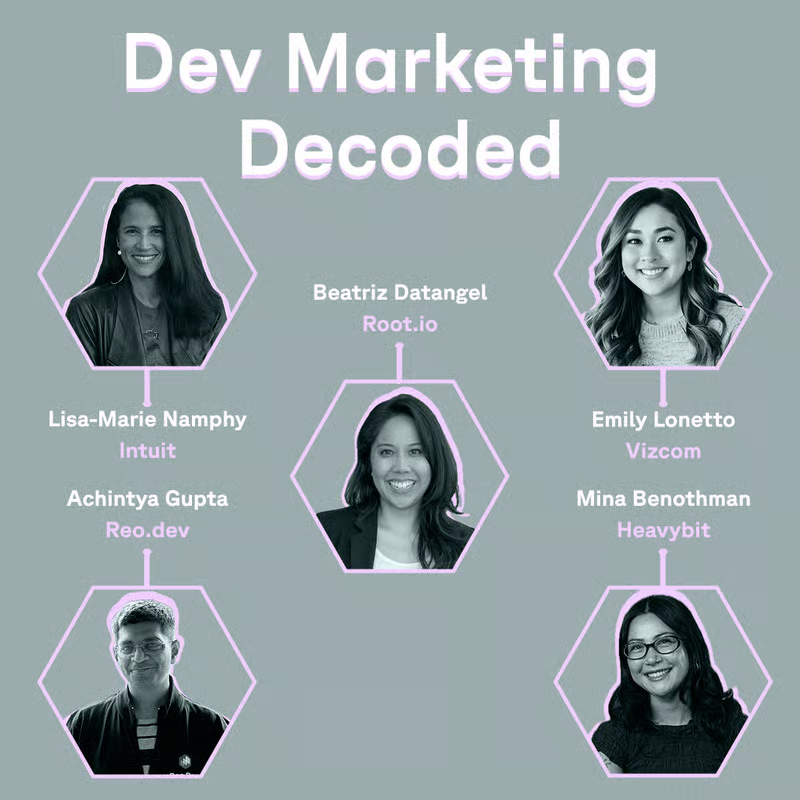
I soft launched Beyond Features last month with a panel that covered ground I don't see discussed enough.
We brought together four incredible panelists to talk about what makes developer marketing different—and why traditional B2B playbooks fail with technical audiences.
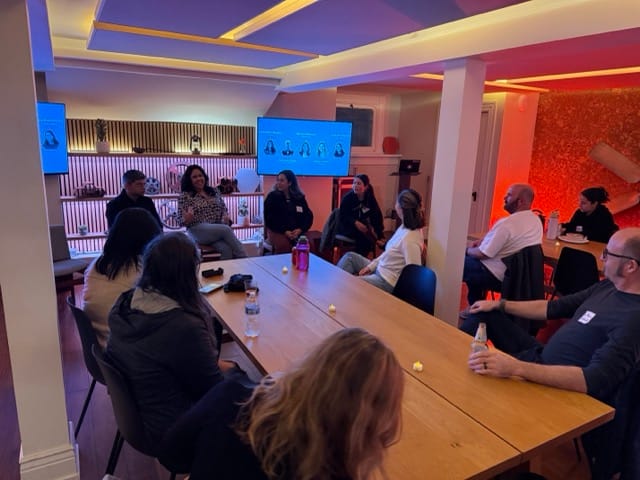
Panelists:
- Achintya Gupta — Reo.Dev
- Emily Lonetto — Vizcom
- Lisa-Marie Namphy — Intuit
- Mina Benothman — Heavybit
- Beatriz Datangel Rodgers - Root (moderator & host)
Here's what we learned
Key Insight #1: Community Isn't a Lead Gen Channel
This came up early and kept coming back. Community building for developers isn't about generating leads. It's about building trust, providing value, and creating space for developers to connect.
What this means:
- Don't measure community success by MQLs or SQLs
- Community ROI shows up in trust, advocacy, and long-term relationships
- Developers can tell when you're using community as a sales channel
- Authentic community building takes time—years, not quarters
The takeaway: If you're building community to generate leads, you're doing it wrong. Build community to serve developers, and business results will follow.
Key Insight #2: Developer Trust Operates on a Different Timeline
Traditional B2B marketing expects results in weeks or months. Developer marketing requires patience.
Why it's different:
- Developers are skeptical of marketing (rightfully so)
- Trust is built through consistent value over time
- Developers share with other developers when they trust you
- Word-of-mouth in developer communities is powerful but slow
What this means:
- Don't expect immediate results from developer marketing
- Focus on long-term relationship building
- Measure trust indicators, not just conversion metrics
- Be patient—developer trust takes years to build
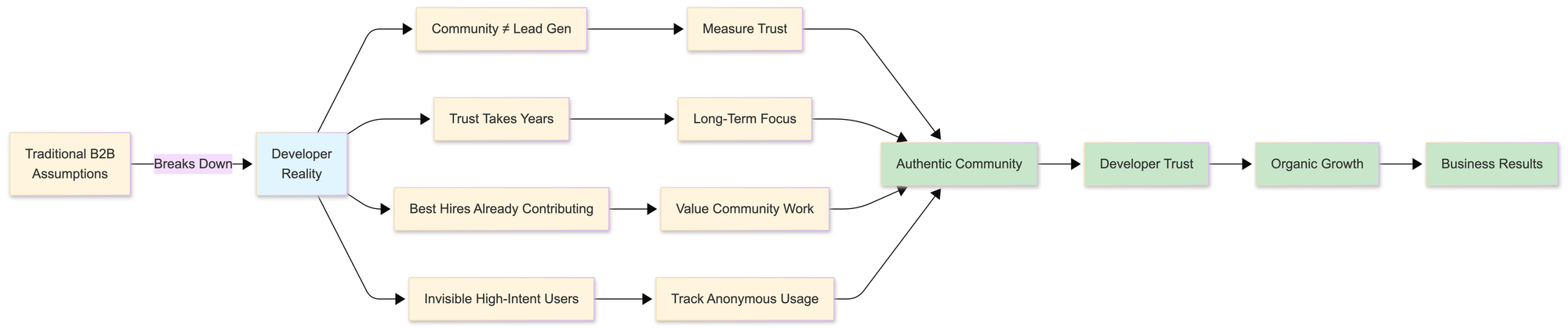
The Framework: Developer Marketing vs Traditional B2B
The four dimensions where developer marketing differs:
| Traditional B2B Marketing | Developer Marketing | |
|---|---|---|
| Metrics | MQLs, SQLs, email signups, demo requests | Trust indicators, documentation engagement, community growth, anonymous usage patterns |
| Timing | Weeks to months (quick wins expected) | Years (long-term relationship building) |
| Hiring | Years of experience, resume credentials, interview performance | Already contributing to community, unpaid work, authentic relationships, community trust |
| Intent Signals | Newsletter signups, content downloads, event attendance, demo requests | Documentation deep dives, anonymous product usage, extensive research before engaging |
The shift: Stop applying traditional B2B frameworks to developer audiences. Build strategies that match how developers actually discover, evaluate, and adopt tools.
The takeaway: Developer marketing is a long game. If you're looking for quick wins, developer marketing isn't for you.
Key Insight #3: The Best Community Hires Are People Already Doing the Work Unpaid
The best community managers and DevRel professionals are often people already contributing to your community without being paid.
Why this matters:
- They understand the community because they're part of it
- They have authentic relationships with community members
- They know what developers actually want and need
- They're already trusted by the community
What this means:
- Look for community contributors when hiring
- Value unpaid community work as experience
- Pay people for work they're already doing
- Build relationships with active community members
The takeaway: The best community hires aren't always the ones with the most experience. They're the ones already doing the work.
Key Insight #4: Your Highest-Intent Users Might Be Invisible
The developers most likely to buy or adopt your product might not look like high-intent users in your analytics.
Why this happens:
- Developers research extensively before engaging
- High-intent developers might only read documentation
- They might not sign up for newsletters or attend events
- They might be using your product without creating accounts
What this means:
- Don't rely solely on traditional intent signals
- Track documentation usage and deep engagement
- Look for patterns in anonymous usage
- Understand that the best users might be invisible
The takeaway: Your highest-intent users might not look like high-intent users. Focus on understanding developer behavior, not just marketing metrics.
What's Next
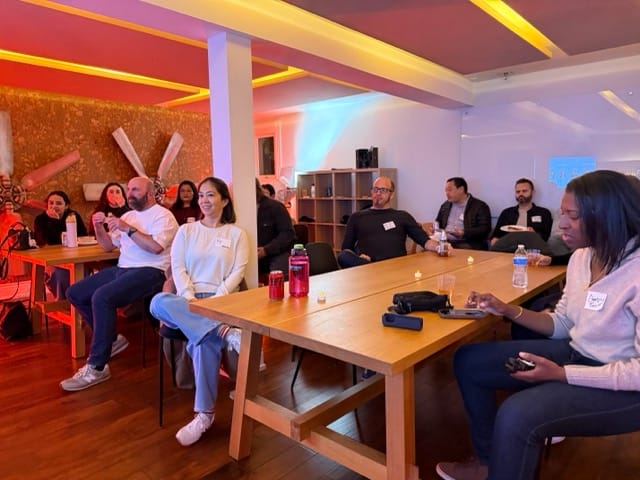
This panel was just the start. We're just starting out and your feedback directly shapes what we create next—from panel topics to frameworks to event formats.
This takes about 2 minutes. Share more about yourself, what you need most (happy hours, panels, dinners?), and what you'd like to see next.
Thank You
Major thanks to Heavybit for hosting us at their office in San Francisco, and to Achintya, Emily, Lisa-Marie, and Mina for sharing their insights.
This is just the start. Be sure to follow along if you're marketing to technical audiences!